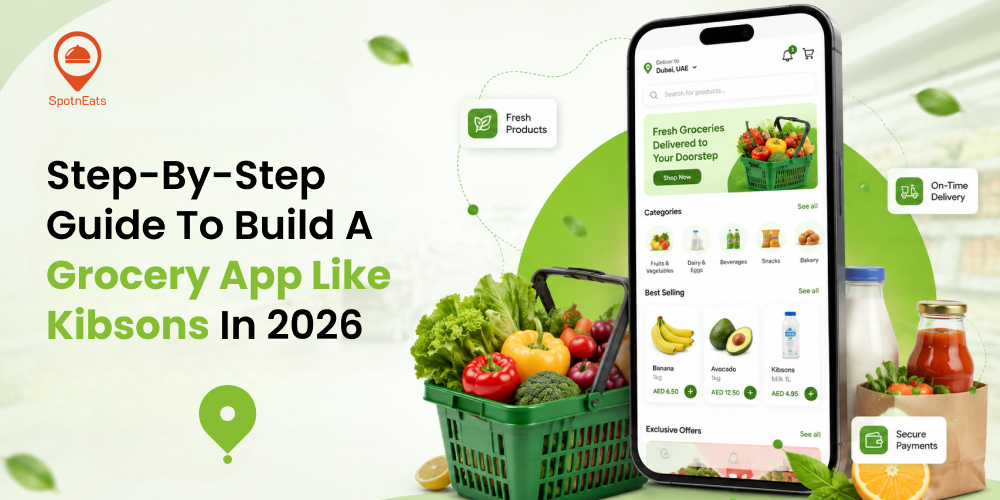
Step-by-Step Guide to Build a Grocery App Like Kibsons in 2026
Ultra-fast quick commerce and scheduled hypermarket models are picking up a rapid pace in the UAE due to fast-growing urban lifestyles and increased smartphone penetration. What was once a single-winner market now witnesses emerging players such as Noon, Instashop, Kibsons, and Careem. Among them, Kibsons has lifted its position as the UAE’s fresh-produce e-commerce platform with smart automation and AI demand forecasting. Grocery stores and food service brands realize the massive opportunity and look for options to build a grocery app like Kibsons and elevate their revenue.
Developing such a grocery app has its set of complexities without the right partner. That’s why we created this helpful guide to simplify the overall process. The grocery delivery platform should combine the right features and capabilities to cultivate lasting brand loyalty, improve user retention, and streamline end-to-end doorstep delivery operations.
A Quick Overview of the Kibsons App
Kibsons app is an online grocery platform designed to offer users across the UAE the convenience of ordering fresh produce, meat, and household essentials. Within a few taps, customers can receive their wholesale-priced groceries at their homes. The app took advantage of AI, data analytics, and automation to reduce food waste while ensuring that the fast-selling items remain in stock.
- They went from low-margin supermarket distribution contracts to capture direct consumer retail margins.
- Utilizing tech in a smart way, the company found a route to keep consumer prices stable without passing on inflation.
- Swapping over to paper-based packaging and owning a temperature-controlled fleet added to their profits.
Why Businesses Should Build A Grocery App Like Kibsons
Supermarkets, multi-vendor marketplace entrepreneurs, and retail startups should develop a grocery delivery app like Kibsons to capture surging online grocery demand. Full-scale grocery apps have a variety of use cases ranging from scaling operations to meeting modern customer habits.
Rapid Regional Growth
With a hyperlocal dark store, entrepreneurs can build a grocery app like Kibsons to seamlessly handle orders and enhance fulfillment. In the UAE region, the tool lets you change pricing, payment methods, and delivery logistics to support regional growth. Users prioritize the quality of their grocery ordering over discounts, which you can highlight in the app.
Higher Customer Retention
Businesses raise their profit margins when customers keep returning to their grocery platform to place orders. Push notifications, one-tap reordering, specialized loyalty programs, and seamless ordering experiences help enhance customer retention. Thus, the app causes reduced friction in users’ repetitive weekly grocery habits.
Strong Operational Control
Grocery stores and chains automate delivery dispatch, track deliveries, and sync stock levels in real time with the digital tool. Before an item goes out of stock, they receive a notification to update the item level to keep delivering the groceries customers want to order at the moment. Delivery agents take the shortest route to pick up the essentials from the store and deliver them to customers.
Direct Customer Reach
The major reason why entrepreneurs shift from aggregators is to keep most of the revenue per order and own the customer data for further profits. By analyzing users’ past shopping habits, the app helps make relevant product suggestions and send targeted push notifications. With the insights, businesses can track delivery zones and peak order zones and optimize delivery assignments.
Features to Integrate In A Grocery App Like Kibsons
Essential features directly impact how customers interact with your grocery platform and the efficiency of your delivery and inventory management. To avoid complexities, focus on the features that let you rise above the existing challenges in the grocery delivery business.
Easy Onboarding
Skip long time in registration times with a user-friendly app interface with social login or personal details. Both the delivery partner and the user complete the smooth onboarding process.
Diverse Categories
Customers can use smart filters, namely organic, vegan, keto, and more, to choose fruits, vegetables, or household items that they want to order at the moment in a few taps.
Live Order Tracking
Without an exact update, customers ring the grocery store or the delivery partner multiple times. The app sends the status of the order from packaging to out for delivery on time.
Product Suggestions
Customers love it when you notice what they frequently order and suggest it. AI-based personalization makes suggestions based on their past orders and trending items.
Multiple Payment Gateways
Payments should be secure and flexible for users. Strong security protocols and a variety of choices, such as cards, cash on delivery, and other options, ensure convenience in payments.
Bulk Ordering
The grocery delivery app like Kibsons supports users in ordering oils, pantry staples, and other household items in larger quantities. It allows the same-day fulfillment option for customers.
Quick Checkout
Customers can complete their checkout process with their saved checkout lists, voice-based ordering, and pre-selected payment methods. Hence, it takes a few minutes to place orders.
Delivery Scheduling
The app enables users to get fresh items with a scheduling option that customers utilize with specific delivery time slots and prefer door-to-door delivery during that time.
Reward Programs
Allow customers to earn loyalty points for every purchase from the grocery delivery app. The program helps retain your customers through tailored delivery discounts.
Analytics Dashboard
The admin gets a complete overview of daily earnings, user activities, and delivery performance. They can assess the top-performing products and update stock levels.
How to Build A Grocery App Like Kibsons: Key Steps
Using the latest technologies and the expertise of teams, build a grocery app like Kibsons to yield higher profit margins. Every phase of development needs complete attention and the endless support of a suitable technology provider like SpotnEats.
Define Your Grocery Business Requirements
What does your grocery business need to achieve with an app? That clarity saves you expensive development and resources. Instead of being generic, carve your niche for your grocery business to reap better returns. Choose between fresh produce, meat, meal kit delivery, or any other specialization. Once you conclude those requirements, you should analyze competitors in the service region and identify gaps that your app can meet.
Decide The Development Approach
Entrepreneurs must make a critical decision: whether to build a custom grocery app or a white-label grocery delivery app. When you go for a white-label solution, you can enter the market faster and try marketing strategies that help you move closer to your customers’ expectations. Observe the market, assess previous projects, and notice the level of technical support before you choose the grocery app development partner.
Focus on User Experiences
UI/UX designs mean the level of convenience your platform gives customers when ordering, tracking, and rating. Users should browse the available categories and add the items to the cart easily. They should be able to navigate between options seamlessly on your grocery delivery app. The designs reflect the performance and help customers connect with your brand. Appealing images of groceries and one-tap reorders will add more value to your app.
Grocery Delivery App Development
The core app development process begins in this stage after you are clear on the aspects to consider in grocery delivery app development. The tech stack your experts implement in developing the app should prepare the platform to handle a large number of simultaneous users, have smoother cart navigation, and enhance overall user experience. Your development partner will inform you of the stages of development and the project delivery timeline. They will develop the grocery app in an agile and transparent manner.
Test & Launch The App Like Kibsons
As impressive as the app may look, it still needs rigorous testing. Every unfavorable situation should be considered, and testing of functionality, security, user experience, and scalability should be executed. The core functionality should be effortless, ensuring the grocery app works smoothly across the Android and iOS platforms, or both, based on your preference.
SpotnEats Delivers Impressive Grocery Store Apps
SpotnEats plays a significant role in grocery delivery app development for startups and enterprises. They specialize in developing grocery delivery app clones like Walmart and Kibsons that exceed client expectations. Meeting modern demand, they use advanced technologies like AI and employ teams with industry-specific expertise to ace the development process and ensure better performance. In the following factors, SpotnEats has a better scope for success than other competitors:
- AI-Powered & Smart Features: Smarter shopping, better recommendations.
- Customizable & Scalable: Built for your brand, ready to grow.
- Multiple Revenue Streams: More services, more ways to earn.
Final Thoughts
Building a grocery app like Kibsons can help businesses tap into the UAE’s growing online grocery market. The right mix of smart features, seamless UX, and efficient delivery can turn first-time users into loyal customers. A scalable platform also opens the door to stronger operations, better customer reach, and multiple revenue streams. With AI-powered personalization and flexible customization, businesses can build an app that stands out in a competitive market. With SpotnEats, turn your grocery delivery idea into a scalable, revenue-focused digital business.
FAQ
Generate revenue through commissions, delivery fees, subscriptions, featured listings, and in-app promotions. You can also add premium memberships, sponsored products, and personalized offers to create additional revenue streams.
Kibsons focuses on fresh produce, smart automation, AI-powered demand forecasting, and efficient fulfillment. This approach helps improve product availability, reduce food waste, and deliver a more reliable shopping experience.
The development cost depends on features, customization, technology, integrations, and the number of platforms you choose. A white-label solution can help reduce development time and cost while allowing you to launch with essential grocery features.
Comments are closed.