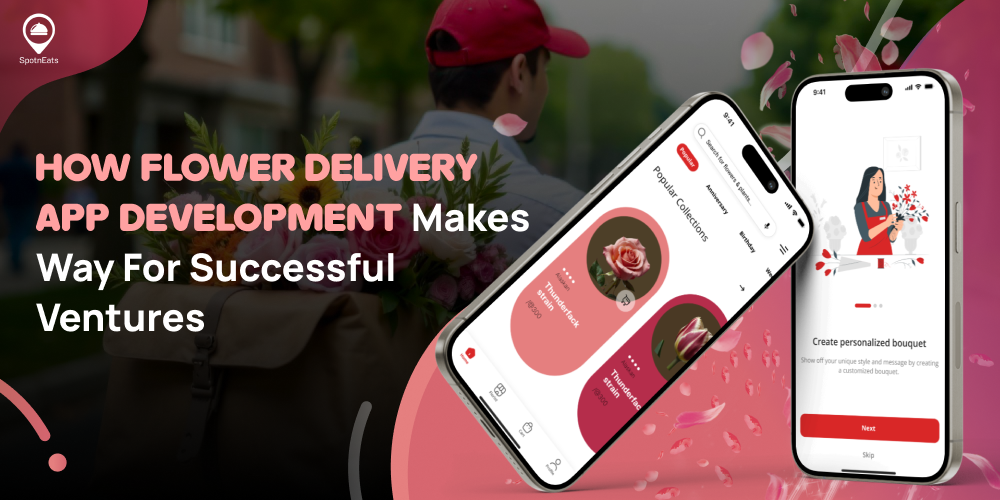
How Flower Delivery App Development Makes Way for Successful Ventures
Floral arrangements are not limited to weddings anymore. Now, they adorn every special occasion and turn every moment into a memorable one. Floral businesses have built their kingdom in the billion-dollar market by capitalizing on the business model. All you need to turn your aspiring business into a recurring revenue source is an on-demand flower delivery app. Businesses have noticed a spike in sales by getting involved in flower delivery app development.
The options to develop apps have expanded. At present, entrepreneurs are keen on developing an app like Bloom & Wild, Glovo, Abloom, and more. The industry presents more opportunities for revenue growth for businesses ready to embrace technological upgradation. This blog reveals how digitizing the flower delivery business with a modern AI-driven app benefits business owners.
Future Market Outlook for Flower Delivery Services
Flower delivery businesses are increasingly expanding their services across regions like the USA, the UK, Germany, and the Netherlands. Flower delivery platforms, globalization, and enhanced accessibility have revolutionized the industry. Customer expectations have reached a new scale through the shifts in shopping habits and leaning towards personalization.
Grand View Research predicts the global flower delivery service market to reach USD 11.27 billion by 2030. The growth rate is predicted at a CAGR of 7% from 2025 to 2030. While North America holds the majority of the revenue share, the US market occupies a larger share with an expected 6.5% CAGR from 2024 to 2030.
- Subscription services and personalized deliveries have gained popularity in apps.
- The flower delivery market embraces innovation in product offerings and delivery methods.
Top Features Of The White-Label Flower Delivery Apps
Features form an integral part of the flower delivery app development process. That’s because it drives user engagement, optimizes deliveries, and streamlines overall management. Discover the top features of the white-label flower delivery apps and integrate them into your app to elevate the way your business functions.
User-Friendly Interface
The white-label flower delivery apps have a user-friendly interface, quick sign-up and login, easy delivery agent partnering, and effortless supplier registration.
Scheduled Delivery
Enables customers to explore the variety of flowers and schedule delivery of the orders based on their specific needs. Pickup and delivery can happen on time.
Advanced Search Filter
Customers can use the advanced search filter option to narrow down preferences by price, occasion, arrangements, offers, and delivery speed.
AI-Powered Suggestions
Customization options give a sense of connectivity that works well for floral businesses. Using past purchase data, the app gives personalized suggestions.
Real-Time GPS Monitoring
From the ordering to shipment and delivery, customers receive instant updates on their orders. They stay updated about the entire fleet.
Multiple Payment System
The convenience of choosing a preferred payment option helps increase customer loyalty. Multiple payment options include credit/debit cards, regional payment gateways, and more.
Reward System
Customers can reorder from the app when they get special rewards and superior service. The app delivers all these qualities for your customers.
Smooth Order Management
When managing orders and suppliers, this feature helps businesses maintain inventory by updating it whenever needed. Update pricing based on demand and events.
AI-Driven Analytics
An AI-based analytics system analyzes market demand, user preferences, and completed orders, giving businesses a smarter way to manage everything.
Push Notifications
Customers receive notifications on their apps about order confirmation, the status of orders, and discounts. Businesses can manage these notifications from the admin panel.
How to Launch Your Own Flower Delivery App
Launching a successful flower delivery platform requires more than developing an application. Operational planning, partner onboarding, and customer acquisition all play important roles.
Step 1: Define Your Target Market
Identify who your customers are and what problems your platform will solve.
This includes understanding geographic coverage, customer preferences, gifting behaviors, and purchasing patterns.
Step 2: Analyze the Competitive Landscape
Research existing flower delivery providers in your target market.
Evaluate their strengths, weaknesses, customer reviews, pricing structures, and service offerings.
Market gaps often reveal opportunities for differentiation.
Step 3: Build Your Supply Network
Reliable florist partnerships and delivery resources should be established before launch.
Strong operational foundations improve customer satisfaction and reduce fulfillment challenges.
Step 4: Select the Right Technology Partner
Choose a provider that understands on-demand delivery operations and can support future growth.
Evaluate customization flexibility, support services, scalability, and implementation experience.
Step 5: Configure and Test Your Platform
Set up delivery zones, payment methods, pricing rules, notifications, branding, and operational workflows.
Extensive testing helps ensure a smooth customer experience from day one.
Step 6: Conduct a Soft Launch
Launching to a smaller audience allows businesses to collect feedback, identify issues, and refine operations before expanding to a larger customer base.
Step 7: Execute Your Marketing Strategy
Combine search engine optimization, social media marketing, paid advertising, referral campaigns, and local partnerships to generate awareness and acquire customers.
A strong launch strategy helps build early momentum.
Step 8: Measure and Improve
Track key performance indicators such as order volume, customer retention, delivery performance, conversion rates, and average order value.
Continuous optimization is essential for sustainable growth.
How Developing Flower Delivery Apps Has Scaled Business Ventures
Flower delivery apps are turning out to be a golden chance for businesses to grow their sales and manage everything effectively. By developing an on-demand flower delivery app like Floward, businesses can tap into the million-dollar market.
An Unmatched Customer Experience
Concentrating on the features, businesses can deliver a user experience that drives repeat orders. The visually appealing product catalog, speedy delivery process, and timely updates increase the value you can bring to your valuable customers.
Flower and bouquet marketplaces are becoming favorites for customers who meet these standards.
Optimized Workflows for Smooth Process
The elegance of the flower delivery business becomes chaotic when orders come in randomly with no efficient way to manage them. The on-demand apps create a peace that every business owner desires when scaling.
From queueing orders to assigning deliveries, the workflow runs in an order with the app. Hence, you can continue managing everything seamlessly.
Every Order Counts In The Business
During holidays or special days like Valentine’s Day or Mother’s Day, you may receive a lot of orders. But at the same time, missed orders can not just be unfortunate but also deter your sales. The advanced flower delivery app records every booking and helps you manage demand and supply.
Using predictive analytics, businesses can anticipate demand and maintain stock levels to satisfy every customer who wants to book an order from them.
Connected Ecosystems For Efficiency
Keeping the momentum among delivery partners and suppliers can be challenging. Manual processes can lead to disconnected systems that leave some party unhappy. The flower delivery app removes this concern by connecting every stakeholder through its advanced features.
Businesses can monitor payments, adjust pricing, and frequently rectify flaws in processes on time for efficiency at every stage.
Expanded Presence of The Brand
Localizations work wonderfully for your business with a flower delivery app like DoorDash that integrates regional payment gateways. Using multi-language and multi-currency support, businesses can expand their services across international regions and ensure customers can access services smoothly.
Whatever your goals may be, there is no doubt about expanded brand awareness by investing in a customizable flower delivery app development.
Diverse Monetization Opportunities
Mobile apps allow businesses to earn through multiple ways other than commissions and delivery charges. Placing relevant ads in the app can help you boost earnings while doing so without impacting customer experience.
You can offer services as subscriptions on the app for customers who are interested in buying from your shops at regular intervals.
The Cost of Flower Delivery App Development
One of the first questions entrepreneurs ask when planning a flower delivery app is how much investment is needed to launch successfully. The answer depends less on a fixed budget and more on the type of business you want to build, the features you need, and how quickly you want to enter the market.
Before evaluating development options, define your business model. A flower delivery app designed for a single florist has different requirements than a marketplace connecting multiple florists across several cities. Your business model influences everything from user workflows and delivery management to payment processing and customer engagement.
Several elements contribute to the overall investment required for a flower delivery app:
- Number of user panels, such as customer, florist, delivery partner, and administrator
- Branding and user experience customization
- Integration requirements for payments, maps, notifications, and business tools
- Multi-language and multi-region support
- Subscription capabilities and loyalty programs
- Ongoing maintenance, support, and future enhancements
Businesses generally choose between custom development and white-label solutions. For many businesses, launching with a ready-made platform allows them to validate demand, acquire customers, and generate revenue before investing heavily in advanced customizations.
The most successful flower delivery businesses evaluate investment based on long-term value rather than initial spending alone. A platform that helps reduce operational inefficiencies, improve delivery performance, and encourage repeat purchases can generate returns far beyond its upfront implementation cost.
Revenue Models for a Flower Delivery App
A successful flower delivery app generates revenue from multiple sources rather than relying on a single income stream.
Diversification improves stability and creates additional opportunities for growth.
Order Commissions
Commission-based earnings remain one of the most common revenue models for marketplace platforms.
A percentage of each completed transaction is retained by the platform while the remaining amount goes to the florist or vendor.
Delivery Charges
Delivery fees provide an additional revenue stream while helping offset operational costs.
Businesses often offer multiple delivery options based on speed, distance, or delivery windows.
Subscription Services
Subscription programs create recurring revenue and encourage long-term customer relationships.
Weekly, monthly, or seasonal flower plans can generate predictable demand while increasing customer lifetime value.
Promotional Placements
Florists and vendors may pay for increased visibility within the platform.
Featured listings, sponsored placements, and seasonal promotions provide advertising opportunities while generating additional revenue.
Seasonal Pricing Strategies
Demand increases significantly during major gifting occasions.
Strategic pricing adjustments during peak periods can help businesses manage operational demand while improving profitability.
Product Upselling
Complementary products such as chocolates, greeting cards, cakes, decorative items, and personalized gifts can significantly increase average order value.
Well-designed upsell opportunities enhance both revenue and customer experience.
Corporate Accounts
Businesses, hotels, event organizers, and hospitality providers often place recurring bulk orders.
Dedicated business accounts can become a reliable source of high-volume revenue.
Referral Programs
Referral initiatives encourage existing customers to promote the platform to friends and family.
This approach can reduce customer acquisition costs while supporting organic growth.
A combination of these revenue streams creates a stronger and more resilient business model than relying solely on order commission.
How to Prepare for Peak Flower Delivery Seasons
Seasonal demand plays a major role in the flower delivery industry. Businesses that prepare early are often better positioned to maximize revenue and maintain service quality during high-volume periods.
Forecast Demand in Advance
Historical sales data can reveal patterns that help businesses anticipate future demand.
Understanding which products perform best during specific occasions supports better purchasing and inventory decisions.
Strengthen Supplier Relationships
High-demand flowers often become more expensive and harder to source during peak periods.
Early coordination with suppliers and florist partners helps secure inventory before shortages occur.
Encourage Pre-Orders
Offering customers the ability to schedule deliveries in advance creates more predictable demand and improves operational planning.
Pre-orders also reduce pressure on fulfillment teams during peak periods.
Expand Delivery Capacity
Additional delivery resources may be required during seasonal surges.
Recruiting and training temporary delivery personnel ahead of demand spikes can help maintain service levels.
Create Occasion-Based Collections
Dedicated collections for specific celebrations simplify product discovery and improve customer engagement.
Curated selections can also increase average order value through bundled gifting options.
Test Operational Readiness
Before major occasions, businesses should review platform performance, delivery workflows, customer support readiness, and inventory availability.
Identifying potential bottlenecks before demand peaks reduces operational risk.
Seasonal Success Requires Consistency
The most successful flower delivery businesses treat every major occasion as a planned campaign rather than a last-minute rush. Consistent preparation, operational readiness, and customer-focused execution help transform seasonal demand into long-term business growth.
The Real Advantage of SpotnEats’ Solutions
SpotnEats is a strategic business partner who specialize in offering feature-rich flower delivery apps. AI-driven features in its apps reveal how it transforms businesses and supports their further growth. At a reasonable price, businesses can purchase the ready-made app solutions and rebrand them according to their specific requirements.
- A robust tech stack is used in its app development to ensure usability, performance, and scalability.
- Complete customization is offered for businesses to turn their remarkable app ideas into successful ventures.
- A transparent approach has been followed in the development process, keeping clients updated at every notable change.
Conclusion
Flower delivery apps act as a bridge between people and meaningful moments. From birthdays and anniversaries to last-minute surprises, the demand for seamless, on-demand gifting continues to grow. By investing in a well-designed flower delivery app, businesses can tap into this evergreen market with features that enhance user experience, streamline operations, and build long-term customer loyalty.
With the right strategy, technology, and execution, your flower delivery app can blossom into a profitable and sustainable venture. SpotnEats takes charge of your app development process and assures a successful app launch.
FAQ
1. How profitable is a flower delivery app business?
A flower delivery app can be highly profitable due to consistent demand, especially during events and special occasions. With proper pricing strategies, partnerships, and customer retention efforts, it can generate steady revenue year-round.
2. What features are essential in a flower delivery app?
Key features include real-time order tracking, multiple payment options, push notifications, easy product browsing, personalization options, and a reliable delivery management system.
3. How much does it cost to develop a flower delivery app?
The cost varies depending on complexity, features, and platform (iOS, Android, or both). A basic app may cost less, while a fully-featured, scalable solution will require a higher investment.
4. How can I attract customers to my flower delivery app?
Effective strategies include SEO, social media marketing, referral programs, discounts, and collaborations with local florists or event planners.
5. Can I scale my flower delivery app business over time?
Yes, you can scale by expanding to new locations, adding more product categories (like gifts or cakes), integrating AI-based recommendations, and enhancing logistics for faster deliveries.
Comments are closed.